In this blog I introduce a recently published paper that appeared in Nature Reviews Biodiversity earlier this year led by Jenny Goldstein and called ‘Environmental data justice is key for developing more effective area-based conservation approaches’. (Here is the link to it).
Conservation science is often characterised by fierce debates. For many people involved this is not at all a realm of dispassionate science. Extraordinary creatures, and their beautiful, vital habitats are disappearing. Notwithstanding some wonderful successes, many conservation efforts are all too often too little, and too late and still leaves more to be done.
Equally the violence and injustices conservation can cause, sometimes on the very people that have so well sustained their lands for biodiversity sticks in the craw of their leaders and activists. Amazing peoples and their livelihoods are thrust aside, all too often for the benefit of rich tourists and their huge carbon footprints.
And yet these different passions need not diverge. Very few conservationists are misanthropes. And the perils of extinction and endangerment are widely recognised. Present day conservation policy-makers and practitioners have become increasingly adept at navigating and catering for these different interests. There is a widespread, perhaps universal, desire that conservation be more effective and more just.
However, the people holding these different perspectives can move in rather different circles. In our paper we argued that it makes sense to see these groups as different epistemic communities – researchers and practitioners who read and publish in similar journals, attend similar conferences, celebrate the same heroes and heroines and so on. They agree on what to disagree about.
Epistemic communities are central to most science. Without them it would be much harder to get things done. They provide a useful structuring that helps us make sense of things like career paths, publication strategies, and what to prioritise in our reading. And, if they become too self-referential epistemic communities can become obstructive. They prevent us from asking the questions, or confronting the issues, that we need to ask.
The challenge, however, is to find ways of bridging across these communities . They often define our comfort zones. It can be difficult to work beyond them.
Challenging these comfort zones was precisely the purpose of this paper, and part of that was visible in the process of writing it. We (almost all the authors listed) convened in the summer in a rural location in Northumberland, in northern England, in a rather lovely wedding venue, that was once a plush home. This came with its own peacocks which woke people up at 5am with their mating calls (Fig 1). It also had a bridal suite, complete with jacuzzi on the roof. Competition for this room, or having too many people in the jacuzzi at once, might have spoilt the meeting. So, we reversed the normal hierarchies and gave it the single PhD student who attended. And thereby we ruined her expectations of future conferences for years to come.

Fig 1: Chris Sandbrook was woken by this display at first light every day.
More than that, we also cooked for ourselves, in groups that crossed the different disciplinary backgrounds present. This worked very well; there was clearly a healthy competition going on to serve up the best meal.
And the sessions themselves deliberately set out to challenge our respective assumptions, values, ideas and data. It was an exercise in growing understandings. Here we were supported by three important aspects. First, there was Chris Sandbrook’s leadership. He is a highly respected conservation diplomat, and scientist, and really adept at bringing different views together. Second, there were Casey Ryan’s networks. Casey was another co-convenor and brought in several brilliant land system scientists. Third, I got Covid on day zero of the workshop. After all, if you have a troublesome anthropologist in your midst then the best thing to do is give them some scrofulous disease and make them self-isolate (Fig 2). That way everyone else is bound to get on.
But bridging epistemic communities is not just about communal eating and strategically deployed infections. It has also to entail intellectual labour, and here we found it particularly helpful to bring in the perspective of a fourth epistemic community – that of data justice. Sometimes a completely different perspective can shed new light on old conundrums and help us to see longstanding disagreements in different lights. In the paper we review seven elements of data justice that would be useful across all epistemic communities. These pertained to the pursuit of accurate data, transparency in methods for compiling data, understanding systematic biases in data, working with data infrastructures, and with data providers, and finally because data justice considerations are new to the other epistemic communities.
The paper took a while to negotiate through peer review, but the NRB editorial team were fantastic. Further the meeting that underpins it helped to kick start the subsequent SNAPP project that Chris lead, on the social implications of 30*30, and which has just produced this wonderful paper led by Javier Farjado. And it also inspired the conduct of my own CONDJUST project and the way we held our first symposium back in 2024. The second, which will follow similar lines, is planned for the end of 2027.
In summary it may be helpful to see this paper, and the process producing it, as a practical exercise in agonistic pluralism. As we explain in the paper, this is an approach that acknowledges difference between epistemic communities while seeking to generate creative tension from this difference. And that takes some of the engineering, in person, and in writing, that produced the paper we released. My thanks to all who engaged so constructively in it.
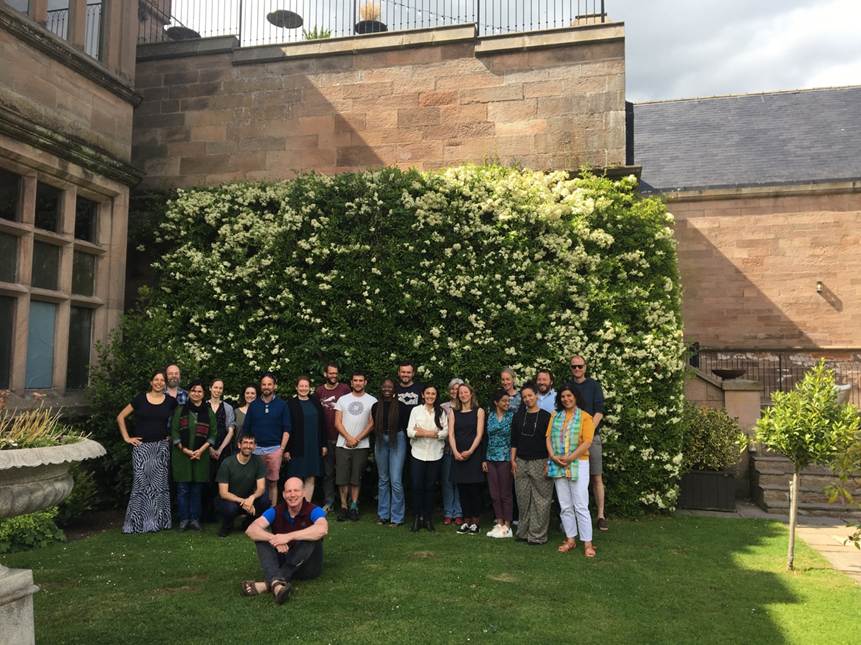
Fig 2: I find I get this sort of reaction even without social distancing.